Unveiling the Blind Spots: Hamlin's Race-Day Revelations
A Challenging Day in Las Vegas: Missed Opportunities and Unforeseen Consequences
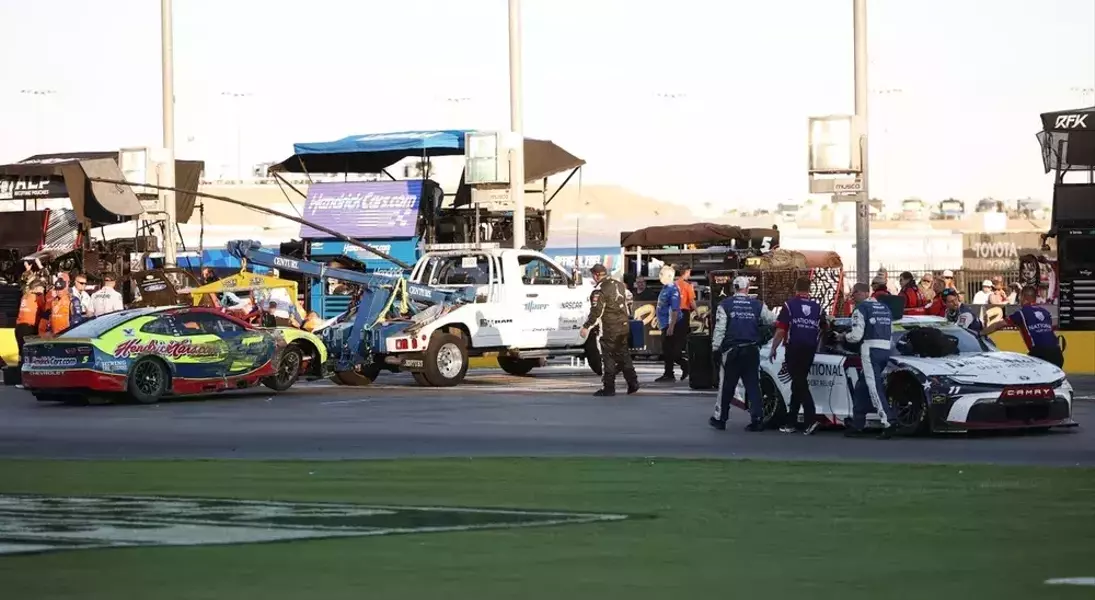
Denny Hamlin and the Joe Gibbs Racing team faced a tough race in Las Vegas, failing to secure stage points and finishing 16th, despite Hamlin's belief that they had a car capable of winning. Two pivotal moments defined their struggles: an early pit stop from the lead and a spin while pushing for stage points.
The Spin and the Pit Stop: Strategic Dilemmas and Unclean Tracks
Hamlin's spin was attributed to venturing into the high groove before the track was clean, where a significant amount of tire rubber had accumulated. The decision to pit was also a complex one, as the tire advantage gained was not substantial enough to make rapid progress through the field.
Unaware of the Rival's Plight: Larson's Struggles Go Unnoticed
During the early stages of the race, Hamlin was completely unaware of his championship rival Kyle Larson's difficulties, which included handling issues and a lengthy pit stop that put Larson a lap down. Hamlin later confessed that had he known Larson was a lap down and would benefit from his own pit stop, he would have made a different decision, regardless of his crew chief's advice.
A Pattern of Unawareness: Echoes from the Charlotte Roval
This incident wasn't isolated. During the 2025 championship battle, Hamlin experienced a similar lapse in awareness at the Charlotte Roval. He was blindsided when Ross Chastain collided with him on the final lap, a move Chastain made to gain a crucial position and eliminate Joey Logano from the Round of 8. Hamlin's subsequent animated discussion with his team on pit road underscored the communication breakdown.
The Phoenix Pit Stop: A Costly Decision in the Championship Race
The championship ultimately slipped away from Hamlin in Phoenix when Larson opted for two fresh tires on the final pit stop, while Hamlin's team chose four, costing him the lead. Hamlin defended his team's process, explaining that their focus was primarily on optimizing his car's performance based on his feedback, rather than monitoring the real-time strategies of their competitors. He acknowledged the need for improved awareness of competitors' actions and more effective responses in critical situations.
Taking Responsibility: A Race-Winning Car Derailed by Misfortune
Hamlin accepted full responsibility for his spin and the subsequent damage to his car, asserting that without these setbacks, his "race-winning car" would have been unstoppable. He recognized that these errors significantly contributed to his current 40-point deficit to Larson in the Chase. With Larson consistently performing at an elite level, closing this gap without securing race wins will prove challenging for Hamlin.
New