Fernando Alonso, a celebrated figure in Formula 1, once conceptualized an ideal racing circuit by merging the most challenging and iconic sections from various global tracks. His vision included the fast-paced Suzuka Sector 1, the flowing Spa Sector 2, and the technical Barcelona Sector 3. This imaginative blend aimed to create an unparalleled driving experience. However, this ambitious design, while thrilling in theory, immediately ran into a practical obstacle under the impending 2026 F1 regulations, as pointed out by fellow driver Sergio Perez. The core issue lies in the new engine specifications, which dictate an equal distribution of power between the internal combustion engine and the battery. This setup necessitates extensive energy recovery zones, making Alonso's high-speed, low-braking-zone track a substantial challenge due to the phenomenon known as 'clipping,' where the battery rapidly depletes without adequate recharging opportunities.
Fernando Alonso's Visionary Track Encounters Technical Hurdles in the Era of New F1 Regulations
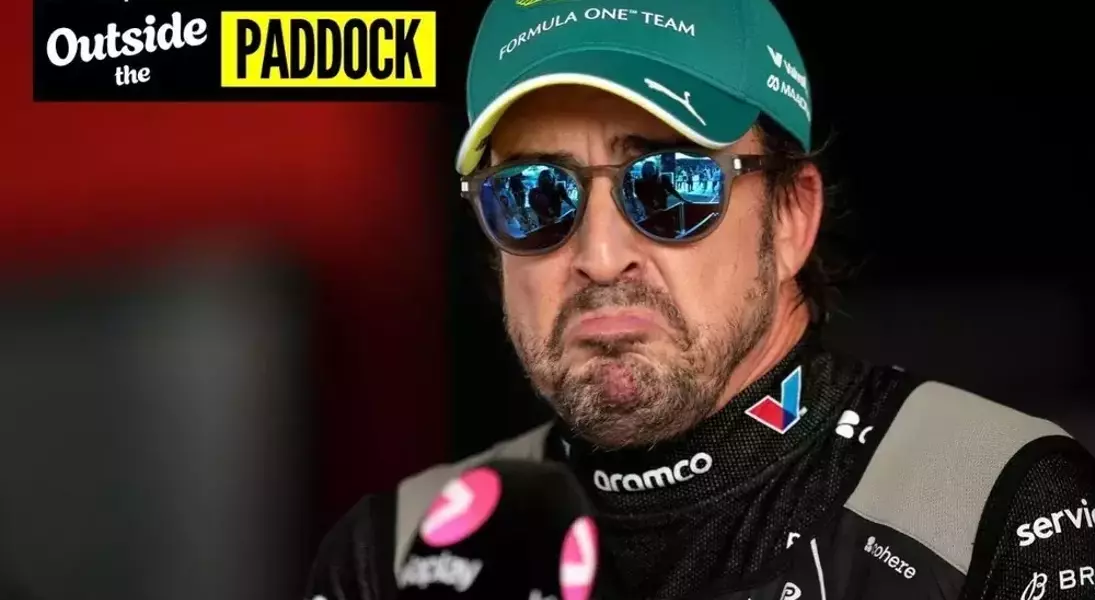
During a public appearance with other racing drivers, Fernando Alonso, the accomplished Aston Martin veteran, was prompted to describe his perfect Formula 1 circuit. He articulated a masterful composite track, meticulously selecting three distinctive sectors from the current F1 calendar. His choices reflected a desire for an exhilarating and technically demanding course. Alonso's initial selection featured the legendary, high-velocity 'S' Curves of the Japanese Grand Prix, known for their rapid changes in direction and requiring precise car balance. Following this, he chose the lengthy, fluid, and incredibly swift middle portion of the Belgian Grand Prix, renowned for its sustained full-throttle sections. To complete his ultimate lap, Alonso opted for the final sector of the Spanish Grand Prix in Barcelona, adding a segment characterized by its technical corners and strategic complexities.
While the audience and interviewers lauded Alonso's imaginative combination, Sergio Perez swiftly identified a significant practical limitation imposed by the 2026 engine regulations. The forthcoming power units are designed with a balanced 50/50 split between traditional internal combustion and battery power. This configuration places immense importance on energy management. A circuit that demands prolonged periods of full throttle without sufficient heavy braking zones for kinetic energy recovery would quickly drain the battery, leading to a noticeable loss of speed, a problem colloquially termed 'clipping.'
Perez playfully remarked on the severe 'clipping' that would inevitably occur on Alonso's proposed circuit, humorously highlighting the technical impracticality of combining such high-energy demand sections under the new rules. Alonso, with a witty retort, expressed confidence in his team's 2026 Honda engine program, suggesting it might circumvent such issues. While this 'super circuit' remains a conceptual ideal, this exchange vividly illustrates how future regulatory changes are reshaping circuit design considerations and driving dynamics within Formula 1.
This discussion highlights the constant evolution within Formula 1, where regulations fundamentally alter not only vehicle performance but also the very nature of race tracks. Drivers and engineers must continuously adapt their strategies and designs to the ever-changing technical landscape of the sport. It serves as a reminder that the pursuit of speed and excitement must always be balanced with technical feasibility and regulatory compliance, creating a dynamic interplay between innovation and limitation.
New