Ed Carpenter Racing (ECR) and Chevrolet have formalized a multi-year extension of their enduring collaboration, cementing their technical partnership as the IndyCar Series anticipates significant regulatory revisions in 2028.
ECR stands as one of merely two racing outfits to have consistently utilized Chevrolet powerplants since the manufacturer's re-entry into the series in 2012 with its 2.2-liter Twin-Turbo V6 engine. This renewed agreement ensures the continuation of their association as ECR approaches its 500th race start during the 2027 season, extending a relationship that began with the team's establishment.
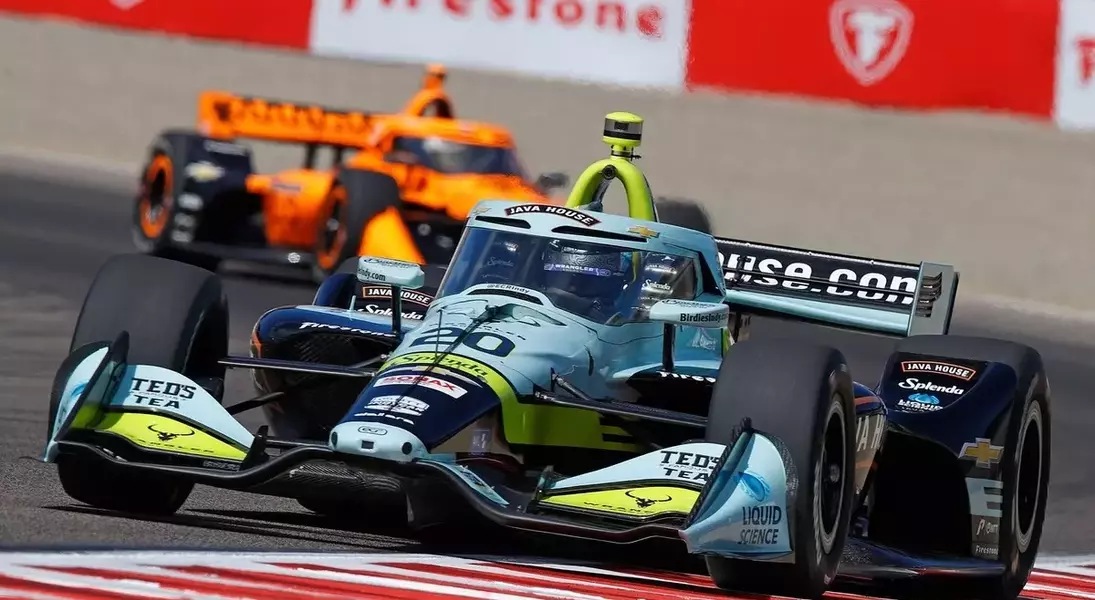
This renewal comes at a pivotal moment for the racing community. With IndyCar scheduled to unveil a new chassis and engine specification in 2028, ECR has already been deeply involved in initial testing. Alexander Rossi, piloting the No. 20 Java House Chevrolet, was among only two drivers to engage in the inaugural on-track evaluations of the upcoming chassis. As development intensifies, ECR will also play a direct role in testing Chevrolet's advanced powertrain.
Ed Carpenter, co-owner and CEO of ECR, expressed his satisfaction, stating, “Chevrolet has been an integral part of ECR since our team's inception, contributing significantly to our growth over the past 15 seasons. We've achieved considerable success with Chevrolet, and we are proud to be one of the few teams to have maintained this partnership since their return to IndyCar. Preserving this continuity is vital as we not only near our 500th race milestone but also embark on the next chapter of IndyCar competition. We cherish our history with Chevrolet and are eager to build upon it.”
Over the past decade and a half, the ECR-Chevrolet alliance has secured nine victories. Ed Carpenter clinched the team's initial triumph in the final race of its inaugural 2012 season, while Christian Rasmussen achieved his maiden career win late in the 2025 season. Rossi concluded the 2026 season by earning ECR's 28th podium finish with Team Chevy.
Exceptional qualifying performances have also been a hallmark of this enduring partnership. ECR has secured six pole positions with Chevrolet engines, including three prestigious Indianapolis 500 poles claimed by Carpenter. When Rossi commenced from the front row at the 2026 Indy 500, it marked ECR's eleventh front-row start at the Indianapolis Motor Speedway in the last 14 years, surpassing all other teams during that period.
Tim Broyles, ECR Team President, added, “We are delighted to extend our collaboration with Team Chevy and to remain one of only two teams powered by Chevrolet since 2012. Chevrolet has been instrumental in ECR's achievements, and we highly value the strong collaborative relationship between our organizations. We are enthusiastic about carrying the strength of this partnership forward into the next era.”
From the manufacturer's standpoint, maintaining technical alignment with ECR is crucial for preparing for the forthcoming chassis and engine regulations.
Eric Warren, Vice President of Global Motorsports Competition at General Motors, emphasized, “ECR has been a significant contributor to Chevrolet's IndyCar program, and this extension underscores the robust technical relationship we have fostered. As the series transitions to its next-generation car and powertrain, close cooperation among our engineers will be paramount. Our shared objective with ECR is clear: to continuously elevate the performance of the Chevrolet package and contend for victories, championships, and Indianapolis 500 triumphs.”
The extended partnership between Ed Carpenter Racing and Chevrolet underscores a mutual commitment to excellence and innovation within the IndyCar Series. This collaboration, spanning over 15 years, has been defined by numerous successes, including nine race victories and six pole positions, notably three at the Indianapolis 500. As IndyCar gears up for significant changes in chassis and engine regulations by 2028, ECR's proactive involvement in testing new components, including Alexander Rossi's participation in initial chassis trials and the team's future role in developing Chevrolet's next-generation powerplant, highlights the strategic importance of this renewed alliance. Both organizations are focused on leveraging their enduring technical synergy to achieve continued high performance and compete for top honors in the evolving landscape of IndyCar racing.
New